 About us
 Current Campaigns
 Start a petition
 Donate
Progress on a National LGBT+ Rights Directive in Brazil
A campaign by All Out and Mães da Resistência Association brought thousands of voices to Brazil’s Ministry of Human Rights, inviting President Lula to join forces in building an LGBT+ Rights Directive as a permanent commitment of the State.At a time when LGBT+ rights are facing setbacks in many parts of the world, Brazilian civil society has shown that dialogue, collective mobilization, and joint action can open real paths toward change.
In October 2025, during the 4th National Conference on the Rights of LGBTQIA+ People, held in Brasília and bringing together more than 1,500 activists and civil society organizations from across the country, All Out and Mães da Resistência Association launched a petition in support of the creation of an LGBT+ Rights Directive in Brazil – a framework capable of ensuring protection, dignity, and rights for LGBT+ people throughout the country.
The mobilization quickly gained momentum. Thousands of people in Brazil and around the world joined the campaign to demonstrate broad public support for the consolidation of public policies that recognize and protect the LGBT+ population.
During the Conference, Marcos Melo, LGBT+ activist from All Out, spoke directly with the Minister of Human Rights, Macaé Evaristo, presenting the petition and reinforcing the importance of an LGBT+ Rights Directive as a fundamental step toward strengthening democracy and human rights in Brazil.
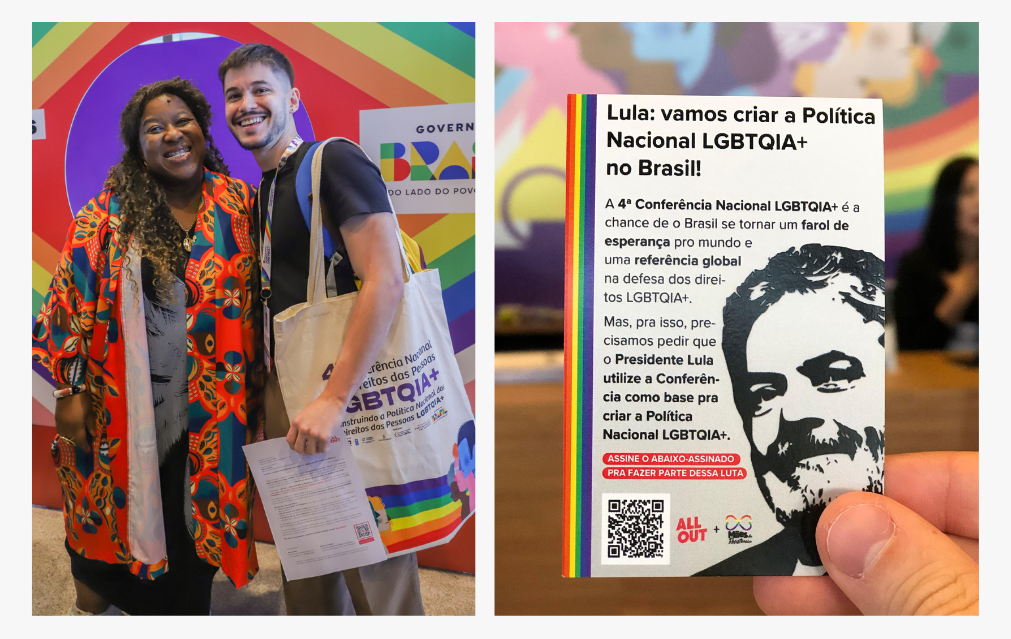
At the end of the event, nearly 3,000 signatures were officially delivered to the National Secretary for the Rights of LGBTQIA+ People, Symmy Larrat, symbolizing concrete civil society support for this agenda.
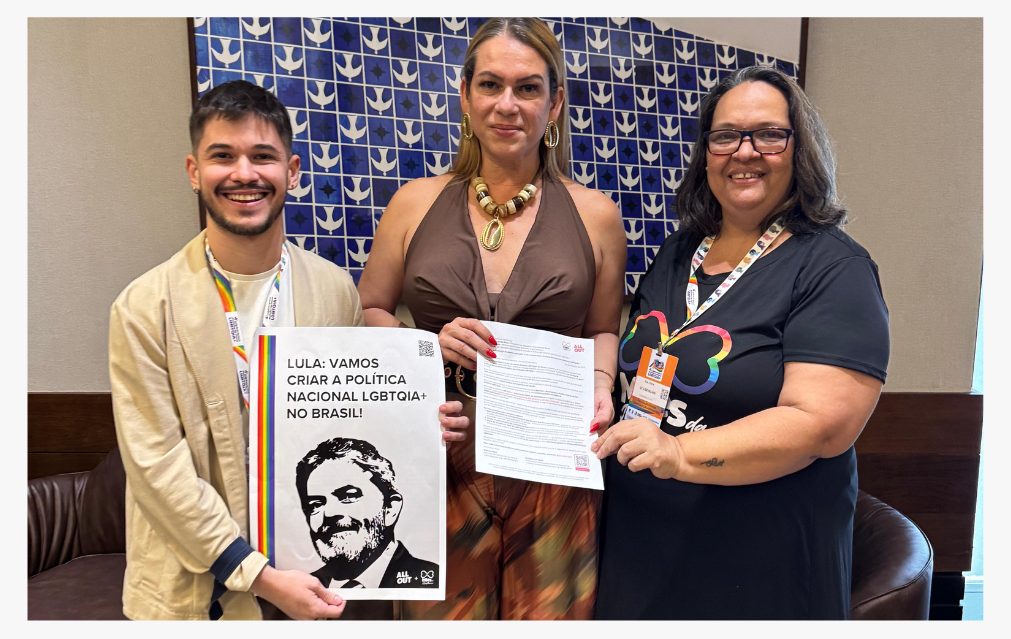
This collective effort has already generated historic progress: the Minister of Human Rights signed Ordinance No. 1,825/2025, which establishes the LGBT+ Rights Directive. This milestone expresses the Brazilian State’s commitment to the dignity, protection, and recognition of LGBT+ people.
The mobilization now enters a new phase. The goal is to expand this dialogue and invite President Lula to join this collective effort by officially enacting the LGBT+ Rights Directive through a presidential decree, strengthening this achievement as a lasting and structural public policy.

The petition remains open, gathering new signatures and amplifying the voices of those who believe in a more just, diverse, and inclusive Brazil. Each show of support reinforces that the LGBT+ Rights Directive is a collective construction – built in partnership between civil society and public authorities.
This first victory is already a reason to celebrate. And the journey continues, guided by the certainty that real progress happens when we move forward together, with dialogue, commitment, and social participation.